Free Psych 101 lessons with Desiree Clemons, M.A.
Psychology that finally makes sense.
Learn about the mind and everyday behavior at your own pace. Join over 7,500 learners watching the free Psych 101 lessons, and download your free psychology notebook today.
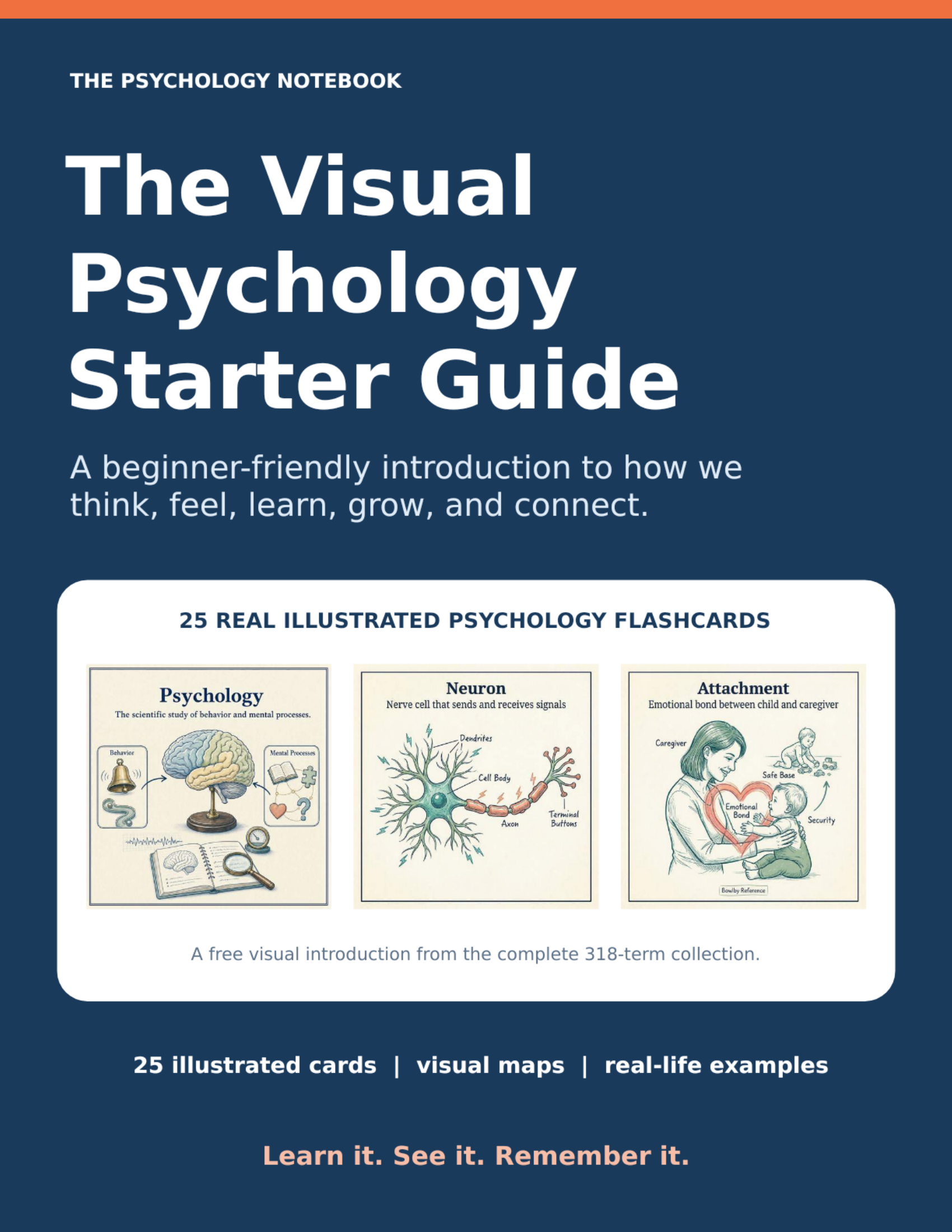
Free download · Instant access · No credit card
For learning only. Not therapy, diagnosis, or mental health treatment.
Free video lessons
Learn it. See it. Remember it.
Watch visual psychology lessons that turn college-level ideas into understandable stories, examples, and memorable concepts.
Newest release
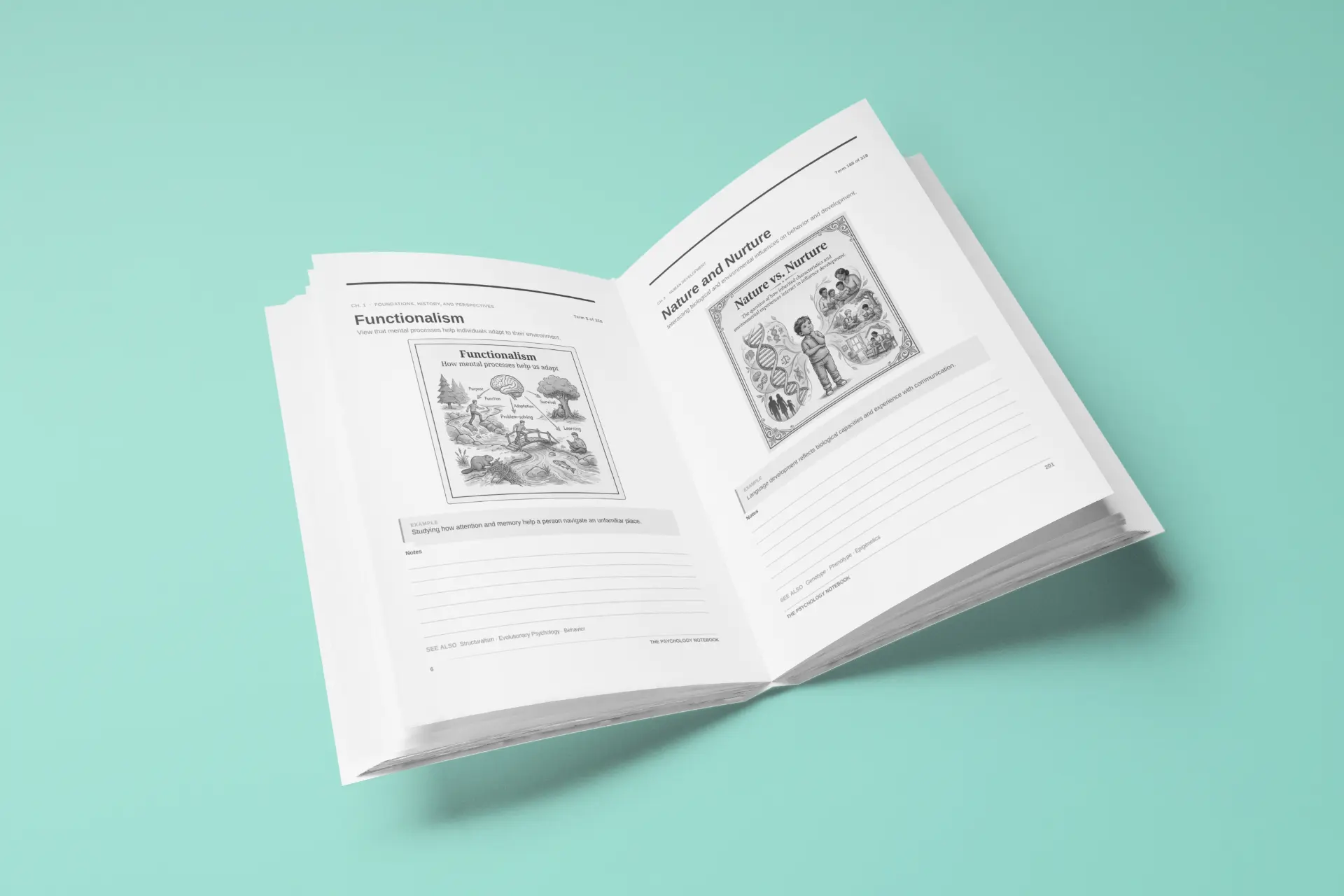
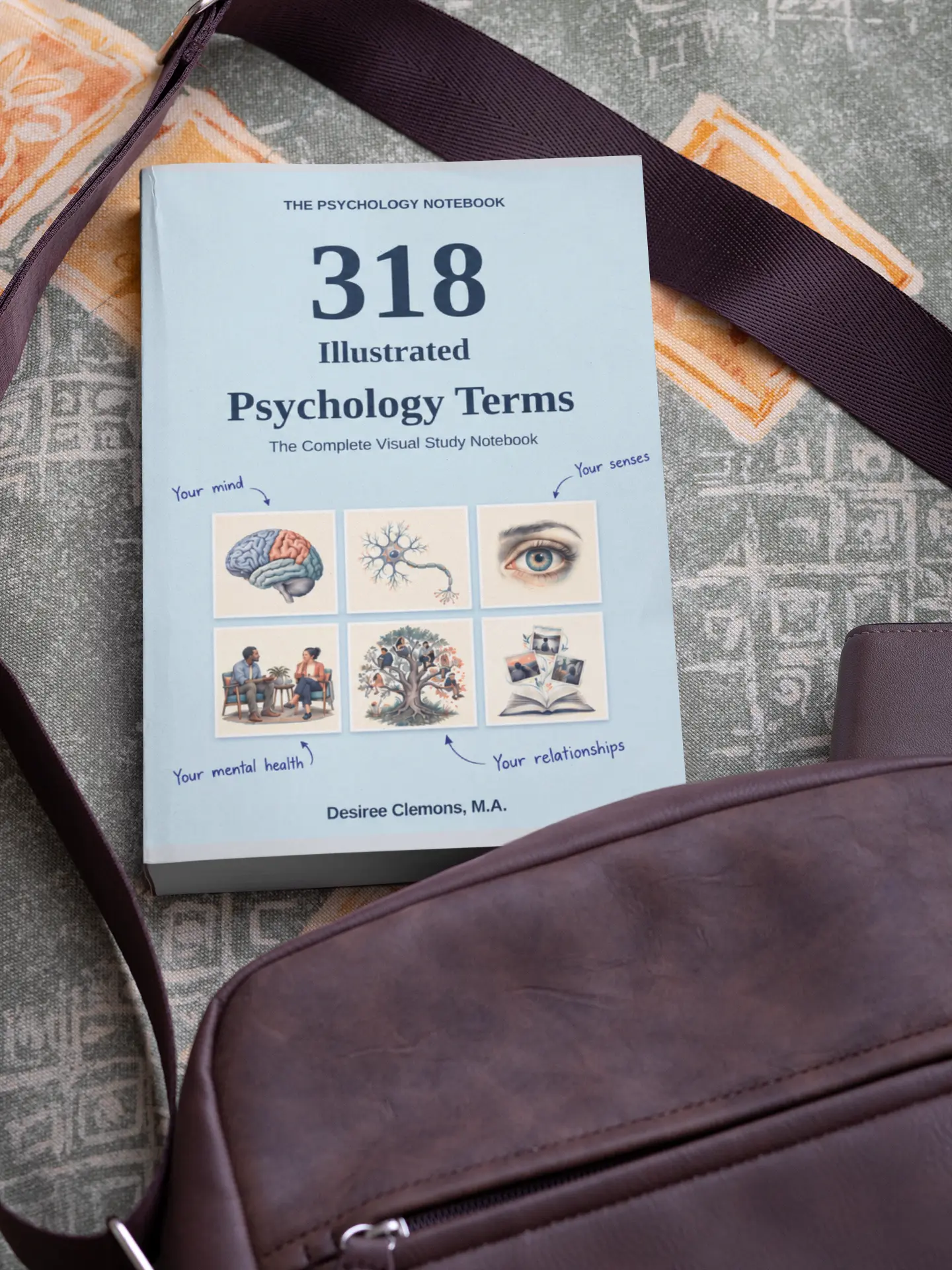
Now available in paperback
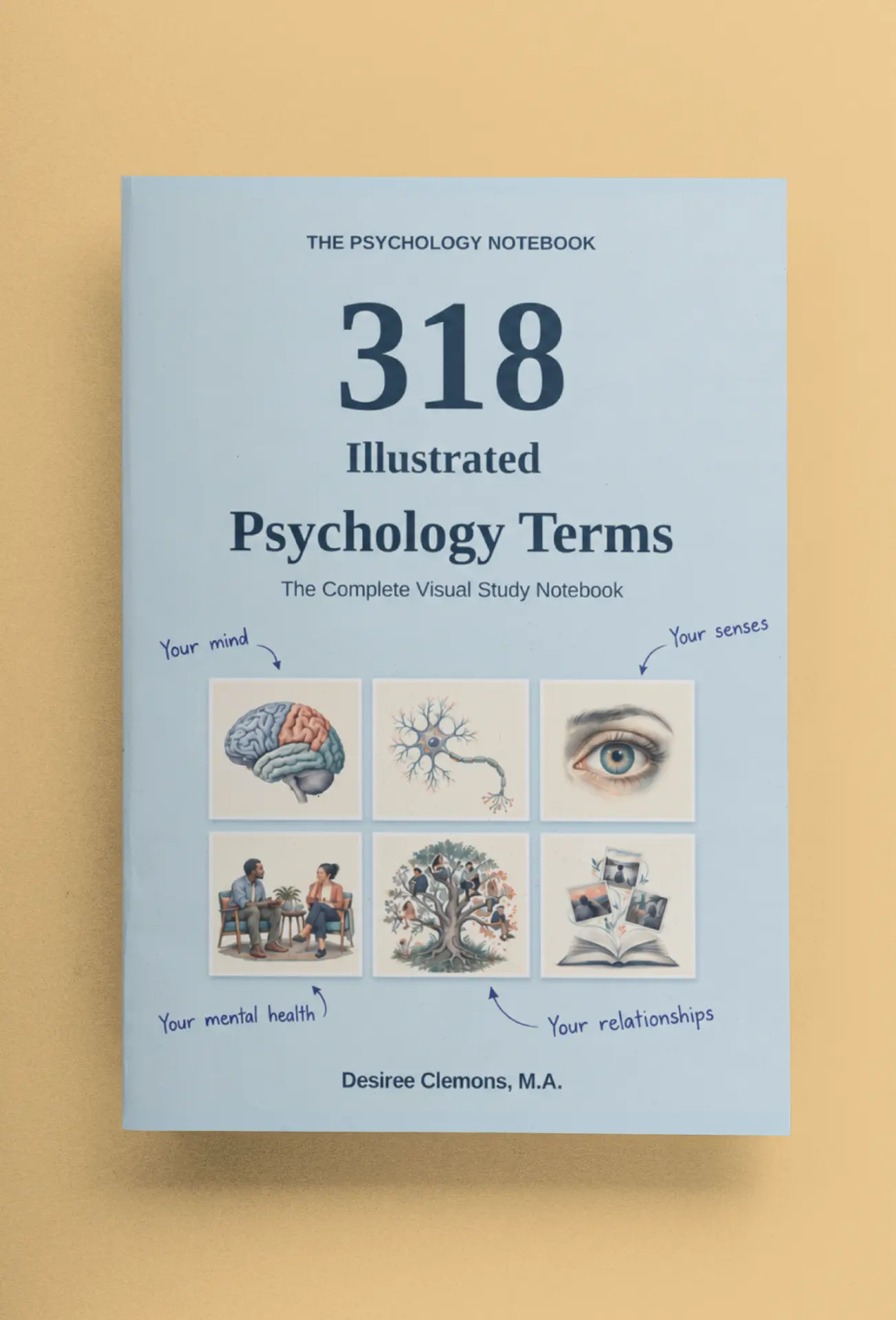
318 Illustrated Psychology Terms
The Complete Visual Study Notebook
Prefer learning on paper? Keep a psychology reference beside you as you follow the free lessons, revisit a favorite topic, or explore something new.
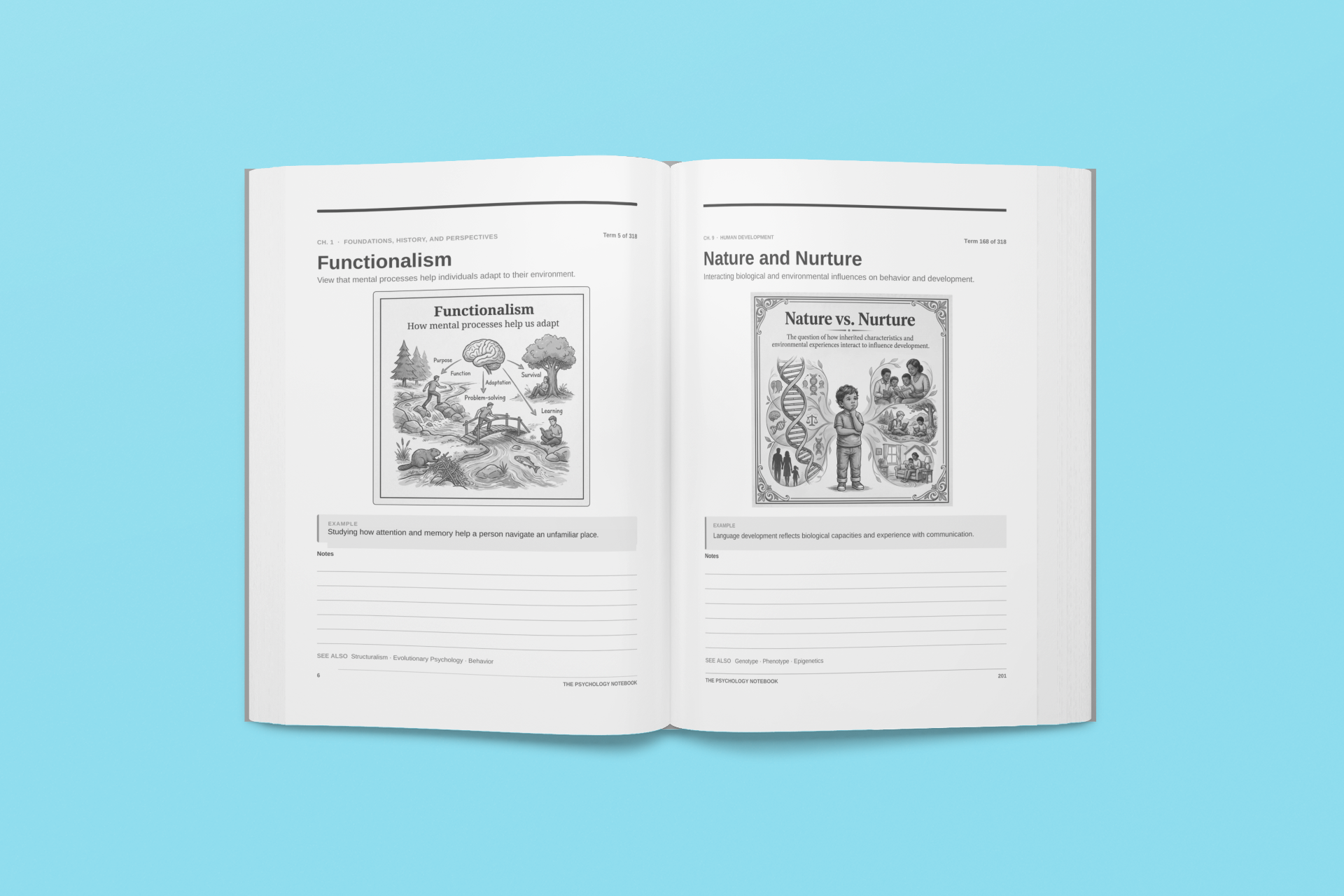
- 318 terms with definitions, illustrations, and everyday examples
- 16 chapters, from the brain and memory to development and relationships
- Space for handwritten notes and connections of your own
- Seven bonus psychology learning maps
Physical paperback · Black-and-white interior · Full-color cover
Explore the Paperback on AmazonSee more book details, current pricing, delivery, and availability on Amazon. Sold separately from the digital study library.
You asked. I made it.
This book exists because learners asked for it.
Learners asked for a way to keep these ideas close, away from a screen. This notebook brings illustrated psychology terms together with space to write your own notes and connections.
Digital or print?
Two different ways to learn the same 318 terms
The color digital notebook and the paperback are separate products. Here's what each one gives you, so you can pick the one that fits how you like to learn.
| Feature | 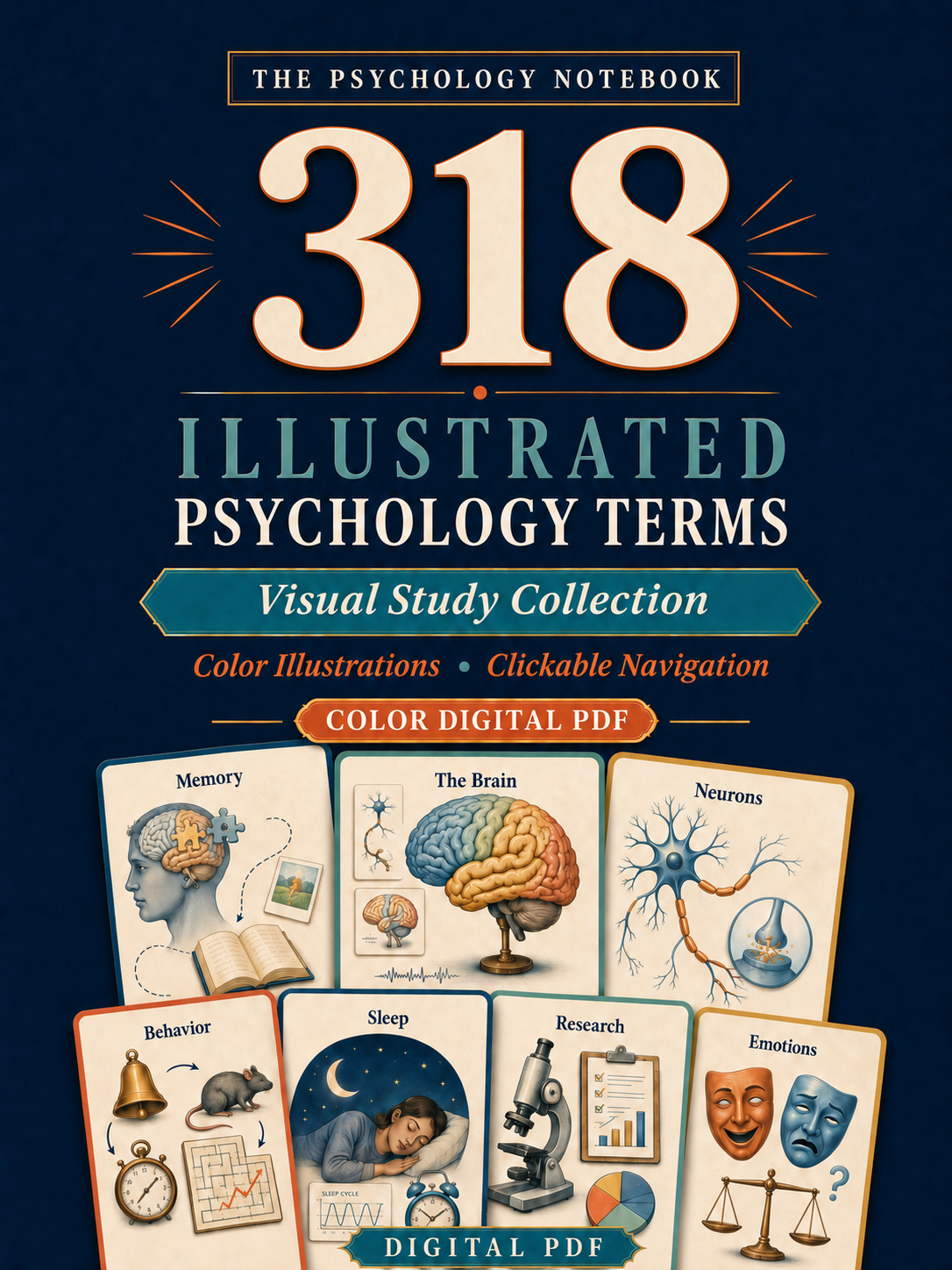 Color Digital Notebook$15 · instant download | Paperback NotebookShips from Amazon |
|---|---|---|
| 318 illustrated psychology terms | ||
| Alphabetical index | ||
| See also and related terms for each term | ||
| Sources and references | ||
| Full-color illustrations | ||
| Clickable navigation, easy to use on your phone | ||
| Instant download, start studying today | ||
| 3 bonus visual learning maps | ||
| Space to take notes on every term | ||
| 32 bonus reference pages | ||
| Sits on your shelf, ready whenever you need it |
Fast, colorful, and ready on your phone
Best when you want to start right now, review quickly, or cram before a test.
Get the Digital NotebookA notebook you can make your own
Best when you want to take notes, learn at your own pace, and keep coming back to it.
See the Paperback on AmazonPrefer a digital resource?
Your psychology reference, without the wait.
Choose downloadable resources if you prefer to read on a screen or print at home. The paperback is purchased separately on Amazon.
Your free starting point
Start with 25 psychology concepts you can actually remember.
Get the free guide and occasional psychology study resources from The Psychology Notebook.
- 25 illustrated psychology concepts
- 5 core perspectives
- Study system + note-taking template
- 10-question self-quiz
Try a flashcard
See how one term becomes easier to remember.
Turn a definition into a visual cue and a real-world example. Tap each card to move between them.
- Definition
- The discomfort that appears when beliefs and actions do not match.
- Visual cue
- Two opposing ideas pulling against each other.
- Real-world example
- Saying you value sleep, then rewatching one more episode at 1 a.m.
Meet the creator
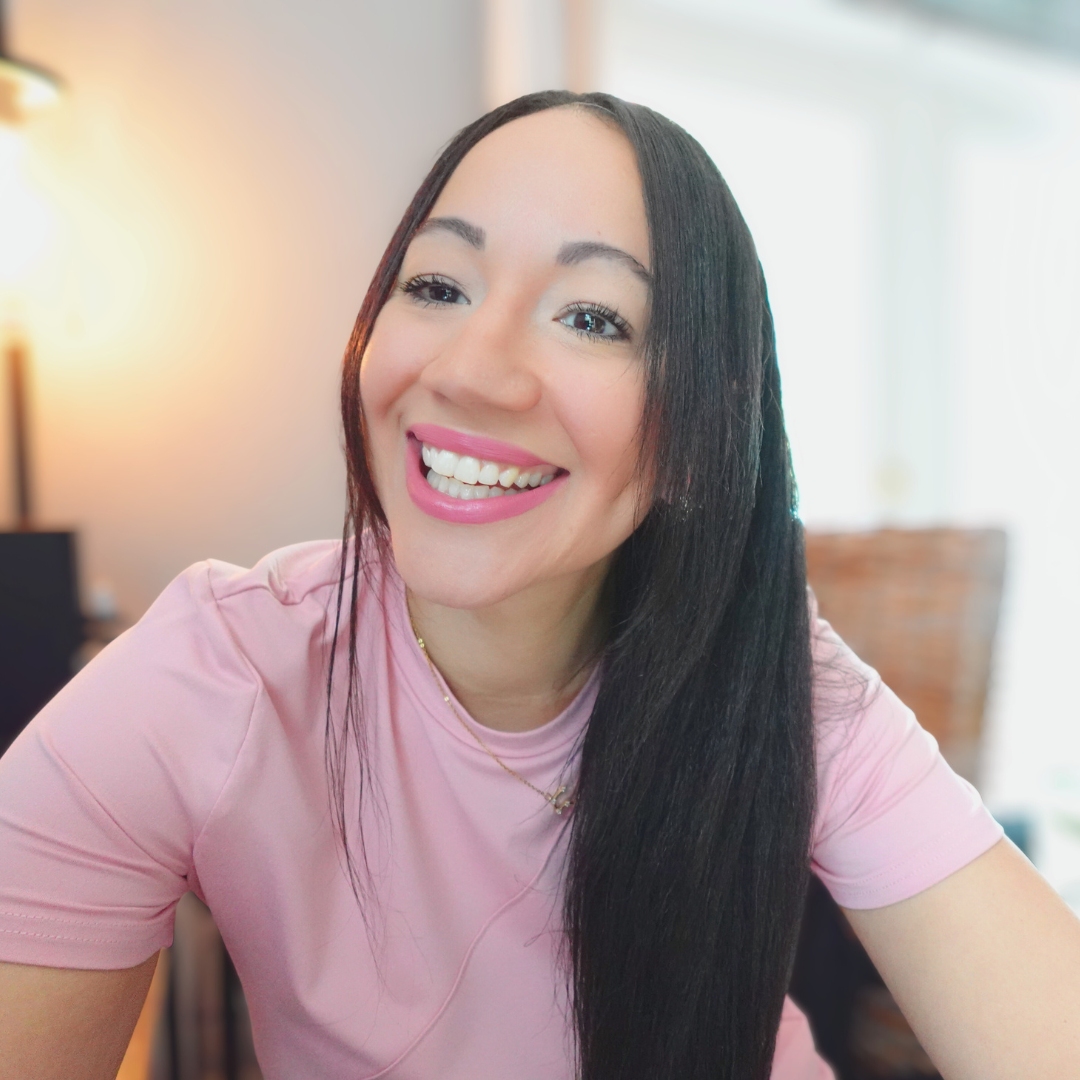
Created by a psychology educator.
The Psychology Notebook was created by Desiree Clemons, M.A., a psychology educator who makes complex ideas clearer through visuals, real-world examples, and practical ways to study.
Learners around the world
Look what learners all around the world are saying.
From first-time learners to working professionals, people are using these lessons to finally understand psychology.
“I loved this it made learning it fun and giving the neurotransmitters little personality's to add the knowledge is a great way to teach i ended up drawing them and writing them down please do more like this”
“Toledo Ohio; Going back to school this fall @ 61 years young. Major in social work... Using your lessons to prepare me for my Psychology Course this Fall.”
“Sou médico há 40 anos... Estou reciclando meus conhecimentos.”
From comments on The Psychology Notebook YouTube channel.
The 318 Illustrated Psychology Terms paperback is rated 5 stars on Amazon. See it on Amazon
Good to know
Questions people ask
Is this therapy or mental health advice?
No. Everything here is psychology education. It is not therapy, diagnosis, treatment, or a substitute for care from a licensed professional. If you are struggling, please reach out to a licensed mental health provider or your local emergency services.
Who is Desiree Clemons, and what qualifies her to teach psychology?
I am a psychology educator, researcher, and writer. I hold a master's degree in psychology with a specialization in therapeutic arts, after a bachelor's in sociology and women's studies, and I am a doctoral candidate. I have spent more than 14 years in and around higher education, including teaching and mentoring, and I am a member of SoTL, the Scholarship of Teaching and Learning community. My research background includes veterans' mental health and moral injury. I did not take the clinical licensure track, by choice: I went into education and research.
Are you a therapist? Can I work with you one on one?
No, and no. I am not a licensed therapist, I do not offer therapy, diagnosis, or treatment, and I do not take clients. Therapeutic arts is my academic focus inside psychology: how creative expression supports reflection and learning. Art therapy is a separate, licensed profession. If you want that kind of support, look for a credentialed art therapist (ATR or ATR-BC in the United States).
Are you affiliated with a university or institution?
Not currently. The Psychology Notebook is an independent education project that I built and run. I am open to partnerships with institutions and organizations rooted in psychology and education. If that is you, contact me.
Where are your videos used?
My channel analytics show the lessons being watched in classrooms and institutions around the world. YouTube does not share exactly which ones, but teachers regularly tell me they play these lessons for their students. That is what they are made for: free, evidence-based, and classroom friendly.
What is your content based on?
Peer-reviewed research, standard psychology textbooks, and an APA-aligned approach. Two texts I return to often are Discovering Psychology (Cengage) and Psychology from OpenStax, the free open textbook. I also use AI tools as research assistants to find additional resources, then work from the published sources themselves. Psychology is a living field, so if you spot an error, contact me. Corrections are welcome, and when I make one, I note it.
How do I know you know what you are talking about?
Please check. Start with the free Psych 101 lessons, where the teaching speaks for itself, then read the research in each lesson's sources. I am not asking anyone to take my word for anything the literature can say better.
Do you recommend products? What is in it for you?
I recommend only books, journals, tools, and services rooted in psychology that I genuinely use or believe in. Some links are affiliate links, which means I may earn a small commission at no extra cost to you; those are always disclosed. My own products are my books and journals, and I describe them honestly, including what they cannot do.
What format will I receive?
The product page names the exact format. Study guides and flashcards are downloadable PDFs; educator lesson sets are editable Microsoft PowerPoint files.
Can I print the resources?
Yes. PDF resources are designed for personal printing, and educator products may be used with the purchasing teacher’s own classes.
Is this a subscription?
No. Paid resources are one-time purchases and remain available in your library.
How do downloads work?
After payment, your files are delivered digitally and added to your library. If a file will not open or download, email hello@thepsychologynotebook.com.
What is the refund policy?
Because access is delivered immediately, digital purchases are final and non-refundable. Preview images and the full contents list are available before purchase.
Which product should I start with?
Begin with the free 25-term Starter Guide. Choose the 151-term Foundations library for core Psych 101 coverage, or the 318-term Color Digital Notebook for the broadest reference and three bonus learning maps.