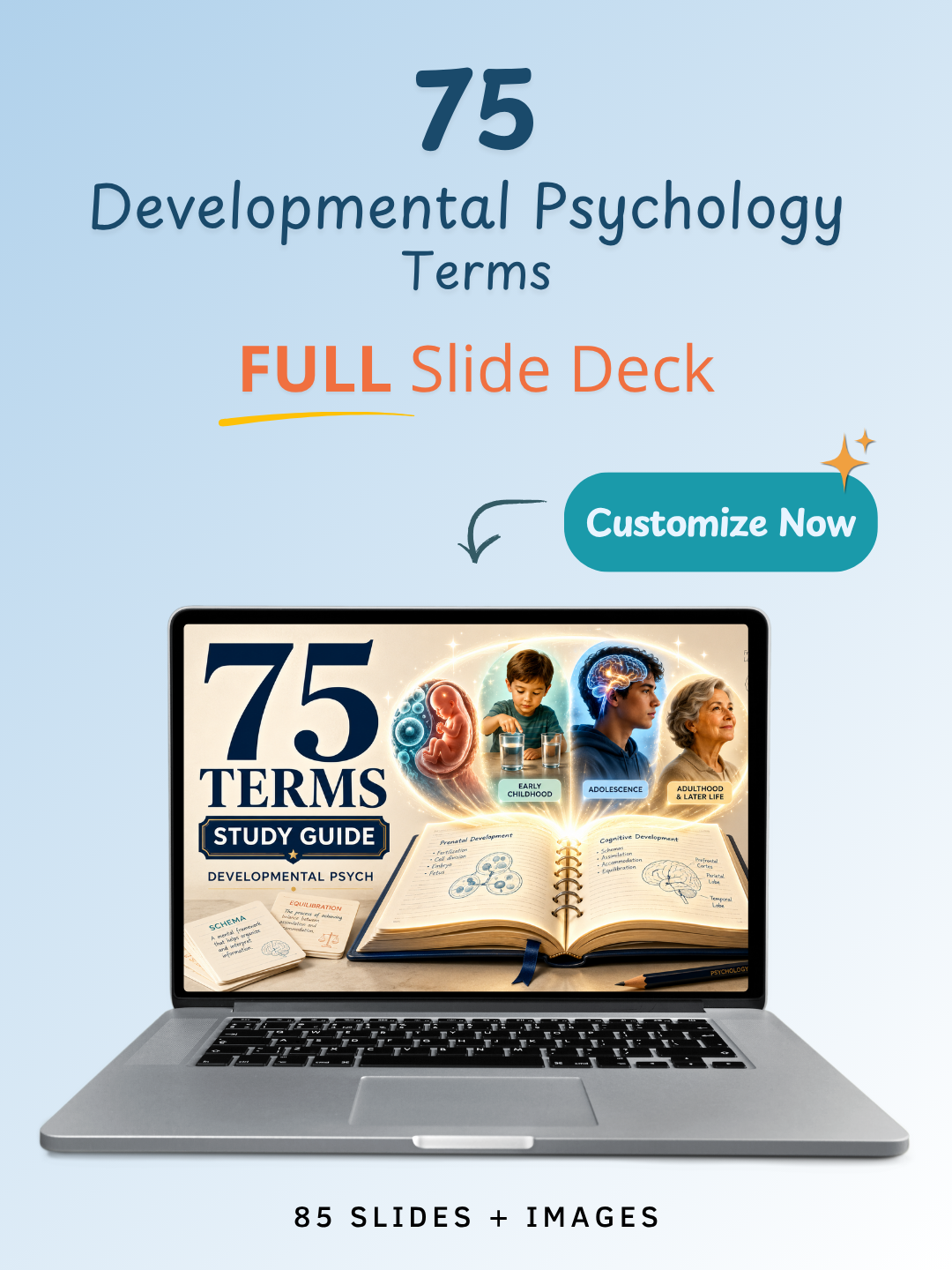
75 Developmental Psychology Terms
Editable PowerPoint for Teachers and Educators
75 developmental psychology terms from infancy through late adulthood — editable slides for teachers and educators.
$10.00
Editable PowerPoint (.pptx)
Pay once, download your files, and keep a copy for personal use. No recurring subscription.
What's inside
- 75 illustrated term slides
- Editable Microsoft PowerPoint (.pptx)
- Infancy → late adulthood
- Built for teachers and educators
Format & delivery
Editable PowerPoint (.pptx). Access begins after payment, and the files stay available in your library.
Before you buy
This is a digital resource. Preview the images and contents before buying. Purchases are generally final, subject to applicable consumer rights. For an order or access problem, contact Desiree.
Developmental psychology in the order it's actually taught — prenatal and infancy, childhood, adolescence, adulthood, and aging — with an illustrated slide for every key term.
Who it's for
- · Teachers covering lifespan development
- · Education and nursing students
Add to your order — save 25%
Students who study 75 Developmental Psychology Terms often add one of these. Bundle them at checkout and each add-on is 25% off — buy it later and it's full price.
Digital PDF · Instant download
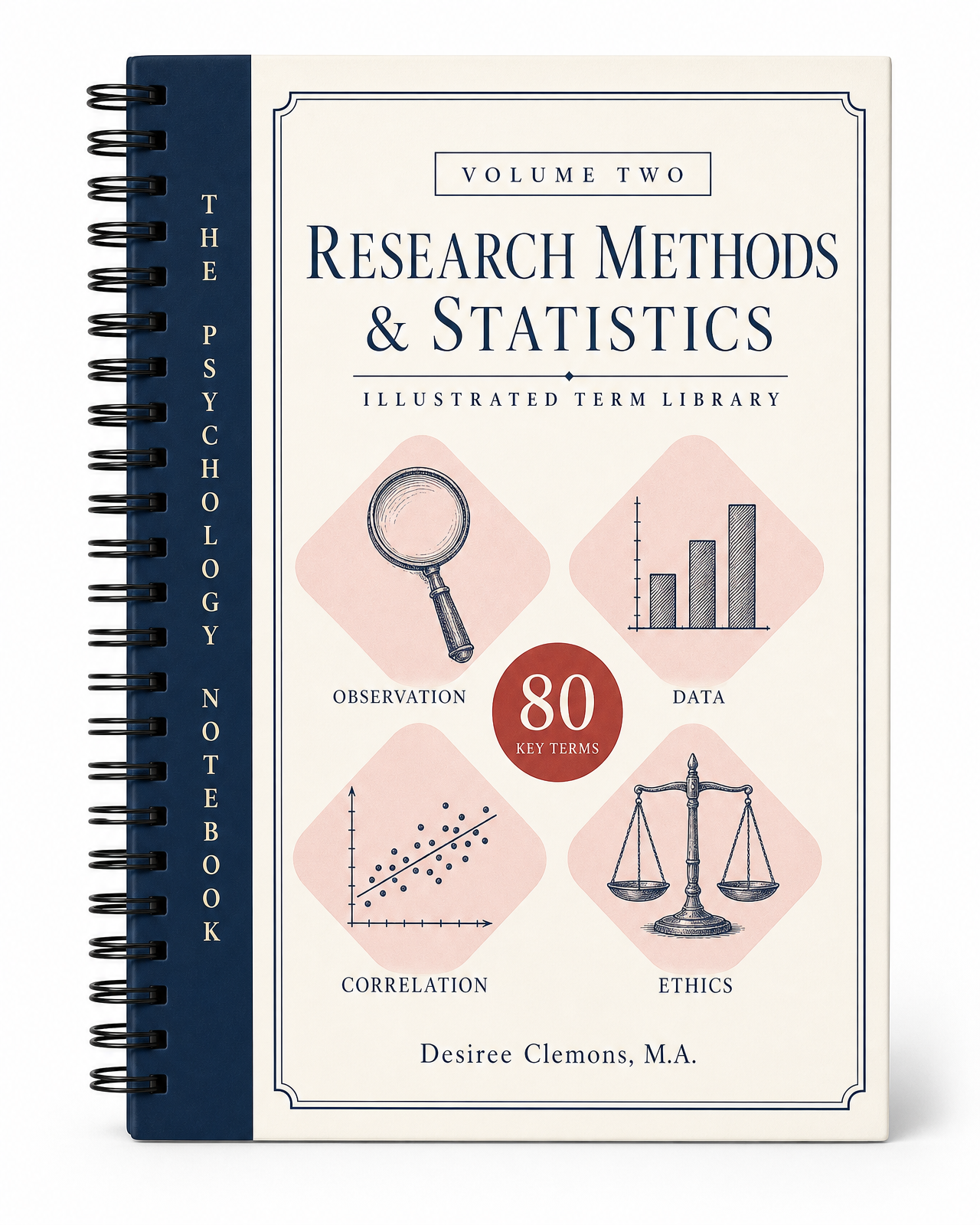
80 illustrated key terms covering research methods and statistics — the vocabulary AP Psych and Intro Psych st…
Add for $2.25 $3.00Adds to your 75 Developmental Psychology Terms order · save 25%
or buy on its own for $3.00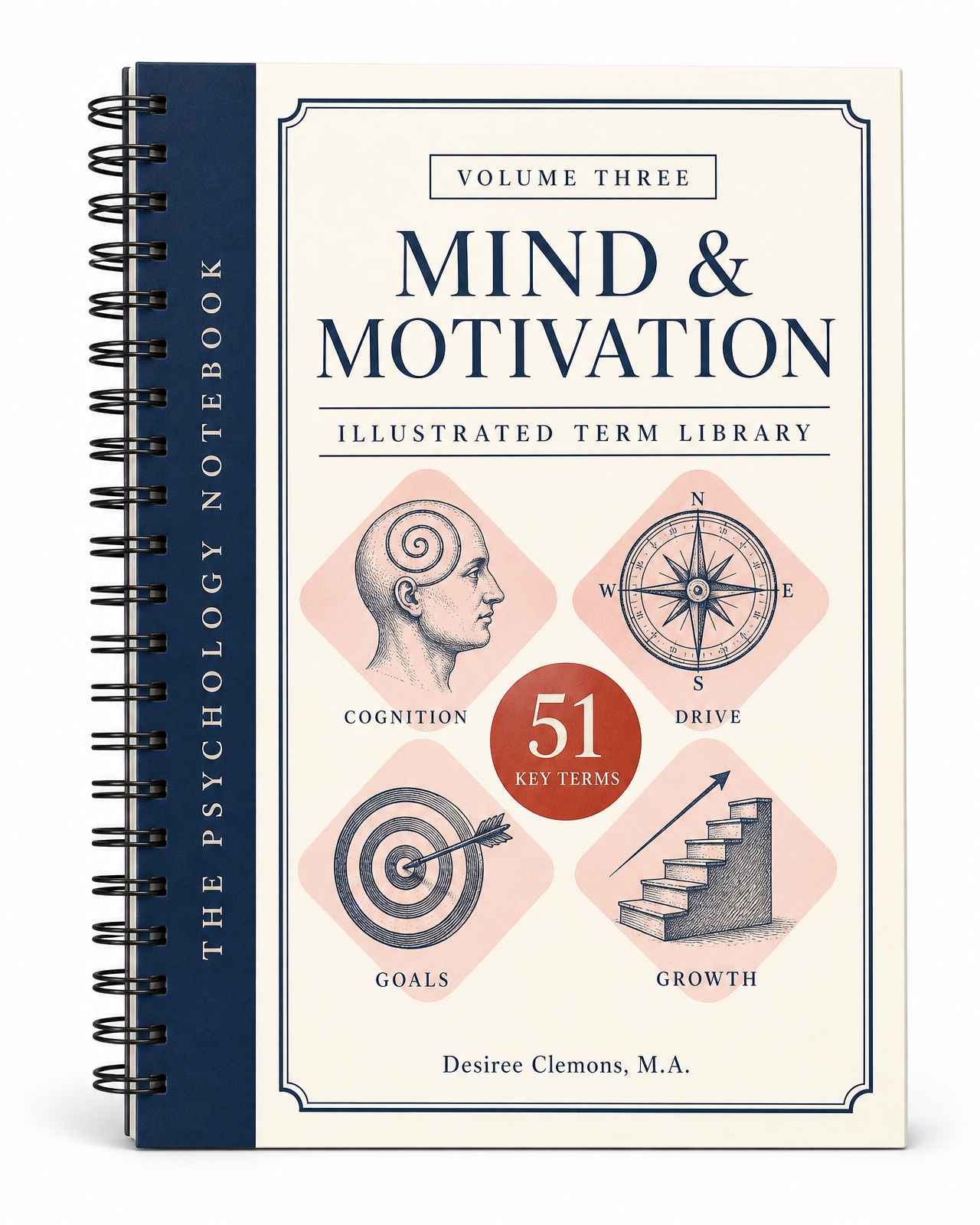
Digital PDF · Instant download
51 illustrated key terms covering mind, motivation, and emotion — a focused mini-library for exploring these t…
Add for $2.25 $3.00Adds to your 75 Developmental Psychology Terms order · save 25%
or buy on its own for $3.00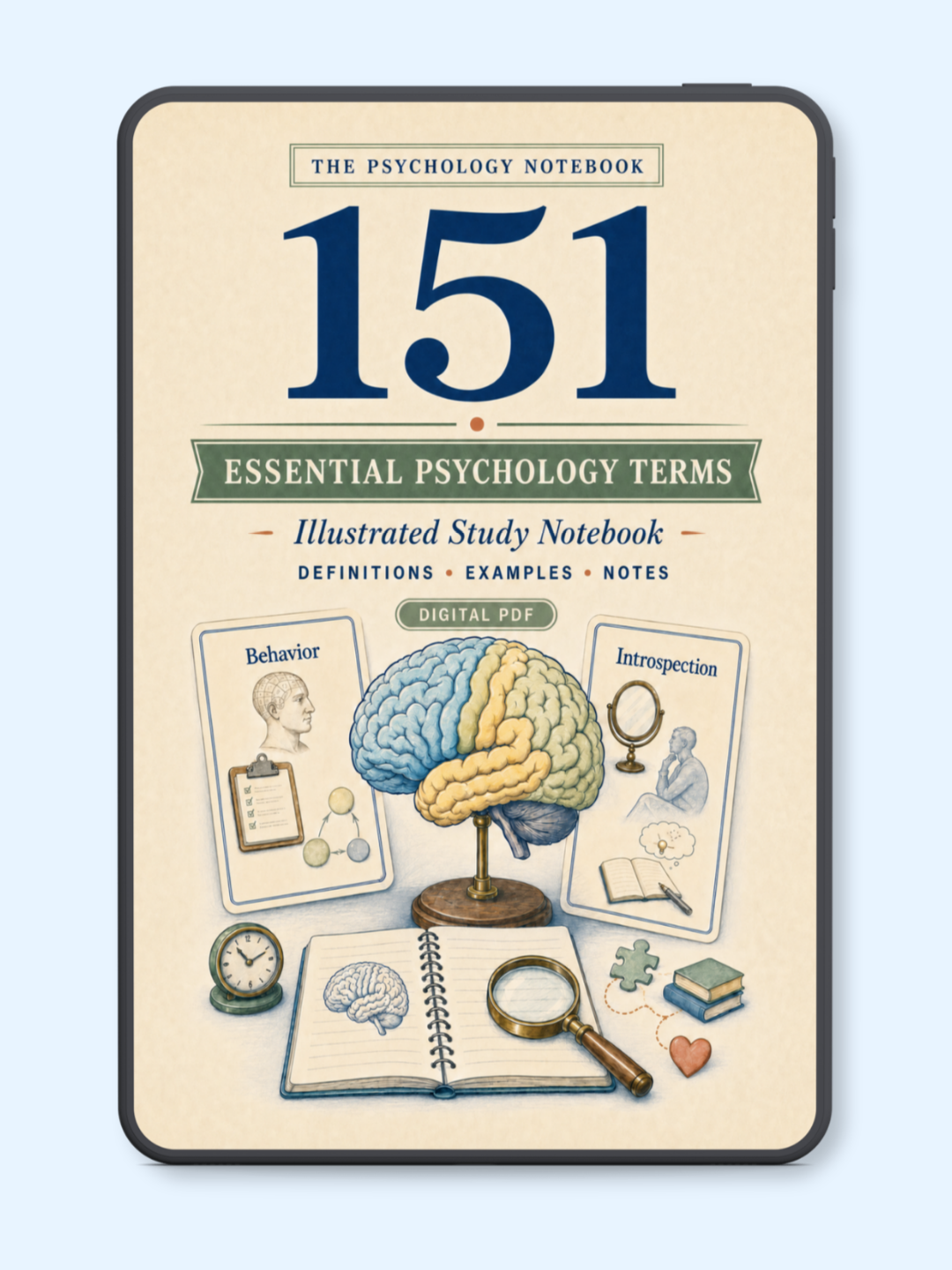
Digital PDF · Instant download
Build a strong psychology foundation without getting buried in textbook language — 151 illustrated Psych 101 t…
Add for $3.75 $5.00Adds to your 75 Developmental Psychology Terms order · save 25%
or buy on its own for $5.00Good to know
Questions people ask
Is this therapy or mental health advice?
No. Everything here is psychology education. It is not therapy, diagnosis, treatment, or a substitute for care from a licensed professional. If you are struggling, please reach out to a licensed mental health provider or your local emergency services.
Who is Desiree Clemons, and what qualifies her to teach psychology?
I am a psychology educator, researcher, and writer. I hold a master's degree in psychology with a specialization in therapeutic arts, after a bachelor's in sociology and women's studies, and I am a doctoral candidate. I have spent more than 14 years in and around higher education, including teaching and mentoring, and I am a member of SoTL, the Scholarship of Teaching and Learning community. My research background includes veterans' mental health and moral injury. I did not take the clinical licensure track, by choice: I went into education and research.
Are you a therapist? Can I work with you one on one?
No, and no. I am not a licensed therapist, I do not offer therapy, diagnosis, or treatment, and I do not take clients. Therapeutic arts is my academic focus inside psychology: how creative expression supports reflection and learning. Art therapy is a separate, licensed profession. If you want that kind of support, look for a credentialed art therapist (ATR or ATR-BC in the United States).
Are you affiliated with a university or institution?
Not currently. The Psychology Notebook is an independent education project that I built and run. I am open to partnerships with institutions and organizations rooted in psychology and education. If that is you, contact me.
Where are your videos used?
My channel analytics show the lessons being watched in classrooms and institutions around the world. YouTube does not share exactly which ones, but teachers regularly tell me they play these lessons for their students. That is what they are made for: free, evidence-based, and classroom friendly.
What is your content based on?
Peer-reviewed research, standard psychology textbooks, and an APA-aligned approach. Two texts I return to often are Discovering Psychology (Cengage) and Psychology from OpenStax, the free open textbook. I also use AI tools as research assistants to find additional resources, then work from the published sources themselves. Psychology is a living field, so if you spot an error, contact me. Corrections are welcome, and when I make one, I note it.
How do I know you know what you are talking about?
Please check. Start with the free Psych 101 lessons, where the teaching speaks for itself, then read the research in each lesson's sources. I am not asking anyone to take my word for anything the literature can say better.
Do you recommend products? What is in it for you?
I recommend only books, journals, tools, and services rooted in psychology that I genuinely use or believe in. Some links are affiliate links, which means I may earn a small commission at no extra cost to you; those are always disclosed. My own products are my books and journals, and I describe them honestly, including what they cannot do.
What format will I receive?
The product page names the exact format. Study guides and flashcards are downloadable PDFs; educator lesson sets are editable Microsoft PowerPoint files.
Can I print the resources?
Yes. PDF resources are designed for personal printing, and educator products may be used with the purchasing teacher’s own classes.
Is this a subscription?
No. Paid resources are one-time purchases and remain available in your library.
How do downloads work?
After payment, your files are delivered digitally and added to your library. If a file will not open or download, send a message through the Contact page.
What is the refund policy?
Digital purchases are generally final because access is provided after payment. If you have an access problem or believe there is an issue with your order, use the Contact page. This policy does not limit any rights you have under applicable consumer law. Please preview the images and contents before buying.
Which product should I start with?
Begin with the free 25-term Starter Guide. Choose the 151-term Foundations library for core Psych 101 coverage, or the 318-term Color Digital Notebook for the broadest reference and three bonus learning maps.