Here’s something that surprises most people when they start studying psychology: ask five psychologists why someone is depressed, and you’ll get five completely different answers, and they’ll all be right.
That’s not a bug. That’s the whole point.
Psychology doesn’t operate from one single theory. It operates from perspectives, different lenses that each explain human behavior in its own way. Learn these seven, and you’ll start thinking like a psychologist.
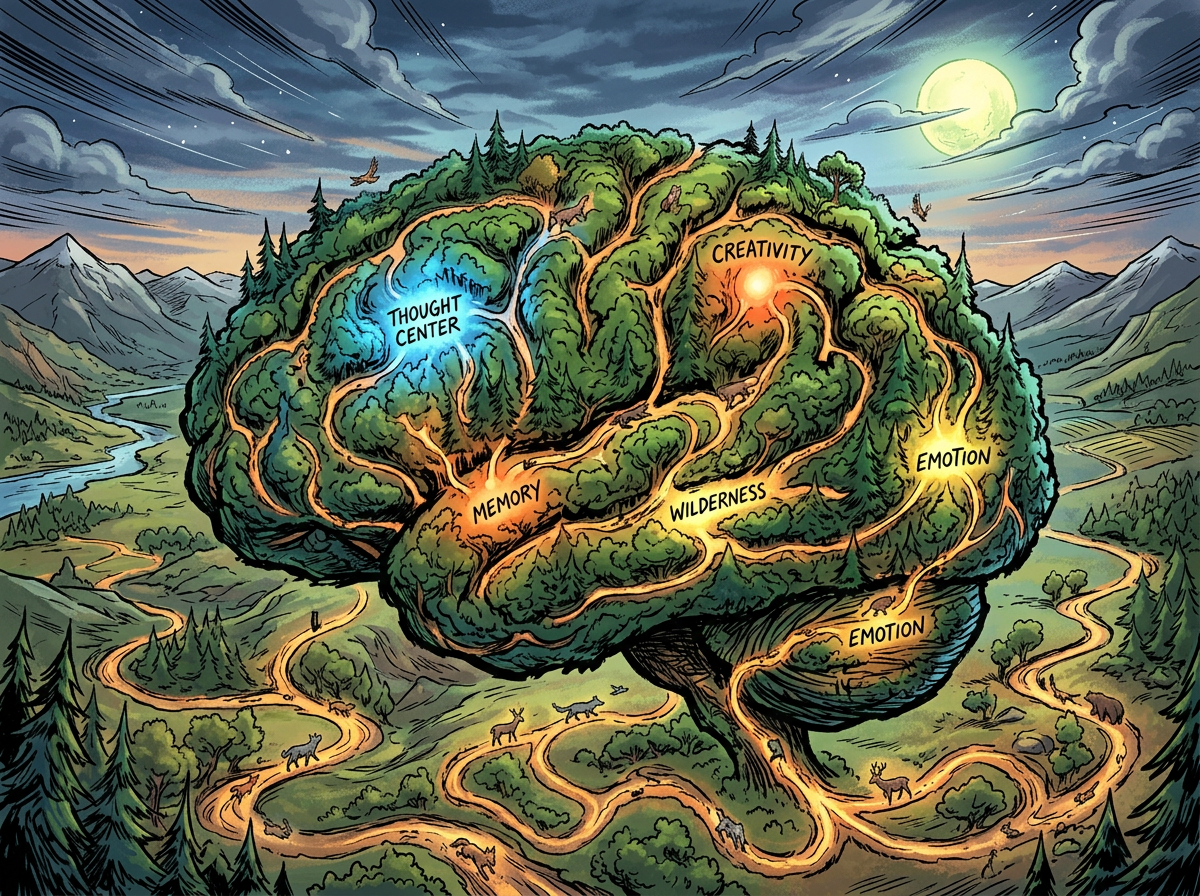
We’re using Frank (our community-chosen character, Moody Mountain Frank) to make each one concrete.
Why Perspectives Matter
Simple question: Why is Frank sad?
Depending on who you ask, you’ll hear very different things.
A behavioral psychologist says he learned sadness. A cognitive psychologist says his thoughts created it. A biological psychologist points to brain chemistry. A humanistic psychologist says his needs aren’t being met.
None of them is wrong. Human behavior is just that layered.
Here are the seven major perspectives, what each one focuses on, and how each one explains Frank.
1. The Behavioral Perspective — Shaped by What You’ve Learned
Key thinkers: Ivan Pavlov, B.F. Skinner
Behaviorism isn’t interested in what’s happening in your head. It’s interested in what’s happening around you — and what you’ve been trained to do in response.
The core idea: behavior is learned. Emotions are conditioned. Your environment is your teacher.
Think about the sound of a phone notification. No one sat you down and said, “When you hear that, drop everything.” You just learned it. That’s behavioral conditioning in real life.
Frank, through this lens: He wasn’t born sad. He learned sadness through repeated rejection. Over time, social interaction became associated with pain, so he started avoiding it.
Behavioral conclusion: Frank’s sadness is a learned response to his environment.
2. The Cognitive Perspective — Your Thoughts Create Your Reality
Key thinkers: Jean Piaget, Aaron Beck, Albert Ellis
Cognitive psychology is all about how you think. Not just what happens to you — but how you interpret it.
Same event, two people, two completely different emotional outcomes. That’s cognitive psychology in a nutshell.
Someone doesn’t reply to your text. Do you think they’re probably busy, or they’re ignoring me? Your interpretation determines how you feel. The text is neutral. Your thought isn’t.
Frank, through this lens: Frank waves at someone. They don’t wave back. The moment is ambiguous, but Frank’s thought is automatic: They don’t like me. That thought creates the sadness, not the wave.
Cognitive conclusion: Change the thought, change the feeling.
3. The Humanistic Perspective — What Do You Need to Thrive?
Key thinkers: Carl Rogers, Abraham Maslow
Humanistic psychology pushed back against the idea that humans are just products of their environment or their unconscious drives. It argued for free will, growth, and meaning.
Maslow’s hierarchy of needs is the classic example from this lens: belonging, purpose, and self-worth aren’t luxuries. They’re requirements.
Frank, through this lens: Frank’s sadness isn’t a disorder. It’s information. Something he needs connection, purpose, a sense of mattering, isn’t being met.
Humanistic conclusion: Instead of asking What’s wrong with him? Ask, ” What does he need?
4. The Psychodynamic Perspective — The Past Is Always Present
Key thinker: Sigmund Freud
Psychodynamic theory holds that much of what drives behavior lies below conscious awareness. Old wounds. Unresolved conflicts. Childhood experiences you don’t even remember clearly anymore — they still shape what you feel and do.
This is the perspective that asks, “What’s really going on underneath?”
Frank, through this lens: His sadness isn’t really about today. It’s a symptom of something older — an unresolved loss, a wound from early rejection, a pattern that started long before this moment.
Psychodynamic conclusion: Frank’s past is leaking into his present.
5. The Biological Perspective — The Brain and Body Do the Work
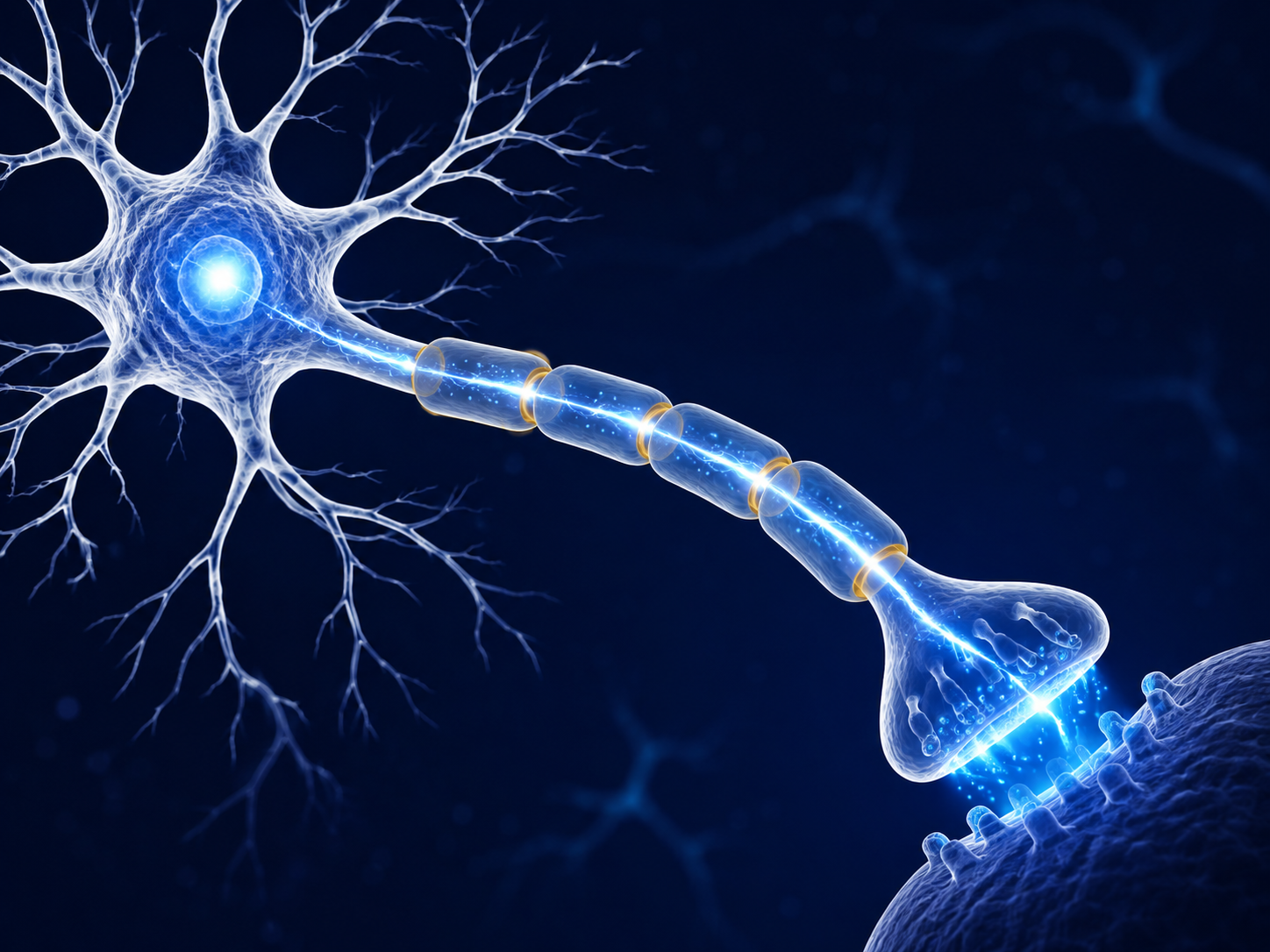
This perspective examines the physical machinery underlying behavior: brain chemistry, hormones, genetics, and neural structures.
If cognition is the software, biology is the hardware. And sometimes the hardware has issues.
Frank, through this lens: His sadness may have a physiological origin — low serotonin, dopamine dysregulation, or a genetic predisposition toward mood disorders. It’s not a weakness. It’s biochemistry.
Biological conclusion: His sadness has a physical cause that may require a physical solution.
6. The Sociocultural Perspective — Culture Shapes Who We Are
Key thinker: Lev Vygotsky
We don’t exist in isolation. We exist inside families, communities, cultural expectations, and social norms — and those things shape us in ways we often don’t notice.
This perspective asks: What’s the social context?
Frank, through this lens: Maybe Frank feels chronically out of place. Like he doesn’t fit the expectations of his community. His values or identity don’t match the world around him. That mismatch is exhausting — and it shows up as sadness.
Sociocultural conclusion: His sadness reflects a disconnect between himself and his environment.
7. The Evolutionary Perspective — Ancient Wiring in a Modern World
Key thinker: Charles Darwin
Evolutionary psychology asks: Why does this behavior exist? The assumption is that emotions and behaviors that persist across time must have served a survival function at some point.
Frank through this lens: Being ignored or excluded doesn’t just feel bad — it feels threatening. Because thousands of years ago, it was. Social rejection meant losing access to food, protection, and mates. Belonging was survival.
Frank’s brain is still running that ancient alarm. The threat isn’t real anymore. But the signal is.
Evolutionary conclusion: Frank’s sadness is an inherited alarm system — useful once, occasionally misfiring now.
A Quick Look at Psychology’s Major Subfields
Each perspective shows up in real-world practice through psychology’s many branches. Here’s a quick map:
Clinical Psychology — Assessment, diagnosis, treatment of mental health conditions.
Counseling Psychology — Life transitions, relationships, personal growth.
Developmental Psychology — Human growth from infancy through old age.
Educational Psychology — How people learn; motivation and teaching strategies.
School Psychology — Supports K–12 students academically and emotionally.
Industrial-Organizational (I/O) Psychology — Workplace behavior, leadership, and productivity.
Health Psychology — The relationship between stress, lifestyle, and physical health.
Forensic Psychology — Legal evaluations, criminal behavior, court cases.
Sports Psychology — Performance, motivation, mental resilience in athletes.
Neuropsychology — Brain injuries, cognition, and neurological conditions.
Social Psychology — Group behavior, influence, attraction, and relationships.
Personality Psychology — Traits, patterns, and what makes individuals distinct.
Lesson 2 Recap
One behavior — Frank’s sadness — had seven completely different explanations. None of them is wrong. All of them are useful.
Psychologists don’t pick one perspective and ignore the rest. They use all of them as tools, choosing the lens that best fits the question at hand. That flexibility is what makes psychology powerful.
If you’re still getting comfortable with how psychological research actually works, check out Lesson 3: How Psychologists Study People, where we get into the scientific method, research designs, and ethics.
Course Textbook Reference
For this Psych 101 series, I reference Discovering Psychology: The Science of Mind. Find it here: https://amzn.to/4qYYDBd
As an Amazon Associate, I earn from qualifying purchases at no extra cost to you. This helps support my work creating free psychology content. Thank you.
🧠 Want to study this faster? Grab the Mega Psychology Flashcard Pack — 318 illustrated terms across 24 chapters, instant download for $9.
Meet Your Instructor

Desiree Clemons, M.A. Psychology
Hi, I’m Desiree, an educator, researcher, and creator of The Psychology Notebook. I share clear, accessible psychology lessons to help students and self-learners understand the mind with confidence.