Are your personality, habits, and emotions shaped more by your DNA or your life experiences?
In this expanded lesson, discover how modern psychology explains the powerful dance between nature and nurture.
Welcome to Lesson 4 in Psych 101
You’re not as original as you think — but you’re not a slave to your genetics either.
Think about your personality.
Your weirdest quirks.
Your taste in music.
Your stress responses.
Your confidence level.
Your ability to connect with people.
Were these written into your DNA before birth?
Or shaped by childhood, culture, and life experience?
This is the nature vs. nurture debate, one of psychology’s most important and long-standing questions.

And by the end of this expanded lesson, you’ll understand:
- What nature actually includes
- What nurture actually shapes
- Why modern psychology no longer sees them as opposites
- What epigenetics means for your healing and growth
- Why two siblings raised in the same home can turn out totally different
- How your brain remains changeable throughout life
Let’s begin.
Why the Nature–Nurture Debate Still Matters
This isn’t just an academic argument — it affects real life.
If depression is purely biological…
Treatment focuses on medication, brain chemistry, and genetics.
If depression is shaped by trauma and learning…
Focus shifts to therapy, environment, and relationships.
If intelligence is inherited…
Education becomes about sorting.
If intelligence is shaped by opportunity…
Education becomes about access and resources.
This debate influences:
- Parenting
- School design
- Criminal justice
- Mental health treatment
- Social policy
- Our understanding of human potential
But before we can understand the debate, we must define the two forces.
What Is “Nature”?
Nature includes:
- Genes
- DNA
- Brain structure
- Hormones
- Neurotransmitters
- Biochemistry
Think of it as your biological blueprint — the raw instructions you inherited.
Two Key Terms (Students ALWAYS Get These Wrong):
Genotype
Your full genetic code — the set of instructions you inherit from your parents.
Phenotype
What we actually observe — your traits, behaviors, appearance, tendencies.
Here’s the important formula:
Phenotype = Genotype + Environment
Your genes are not your destiny.
They are the starting point, not the finish line.
How Do Psychologists Study Genetics? Twin Studies
We can’t look at your DNA and find a “shyness gene” or “extraversion gene.”
So psychologists use twin studies, one of the most powerful tools in behavioral genetics.
Identical Twins
- Share 100% of their genes
Fraternal Twins
- Share 50% of their genes
If identical twins are more similar on a trait (like anxiety, intelligence, or risk-taking) than fraternal twins, researchers conclude that genetics influence that trait.
This method helps estimate heritability.
But heritability does NOT mean:
- “Your trait is 60% genetic”
- “You are 40% environment”
- “Your depression is coded into your DNA”
Heritability is about groups, not individuals.
Genes provide probabilities, not guarantees.
They influence — they do not dictate.
Evolutionary Psychology: Why We Have the Traits We Have
To understand why certain tendencies exist, psychologists look back to natural selection, a concept introduced by Charles Darwin.
Natural Selection
Traits that helped early humans survive (such as fear of danger) were passed on.
Sexual Selection
Traits that helped individuals attract mates (like confidence or social awareness) were also passed on.
Examples of evolved tendencies:
- Jealousy
- Social bonding
- Fear of rejection
- Stress responses
- Attention to facial expressions
These aren’t random quirks — they may be evolutionary survival strategies.
But evolution doesn’t create your entire personality.
It creates predispositions.
Nurture shapes what those predispositions become.
What Is “Nurture”?
Nurture is everything environmental:
- Parenting
- Culture
- Education
- Friend groups
- Trauma
- Opportunity
- Socioeconomic status
- Life events
- Media and technology
- Modeling and learning
Example: Language
Nature: every brain is prepared to learn a language
Nurture: only experience determines which language you learn
Example: Stress response
Nature: you may be predisposed to anxiety
Nurture: trauma may activate or intensify it
Experiences accumulate.
They leave patterns.
They shape behavior.
They influence confidence, trust, attachment, stress, beliefs, and habits.
But there’s an even deeper layer…
Epigenetics: When Environment Talks to Your Genes

Epigenetics is one of the most revolutionary discoveries in modern psychology and biology.
Epigenetics = Environmental changes in gene expression
Your DNA code stays the same.
But experiences can:
- Switch genes on
- Switch genes off
- Intensify gene expression
- Reduce gene expression
Examples of epigenetic influences:
- Chronic stress
- Trauma
- Nurturing, stable relationships
- Nutrition
- Early childhood environment
- Physical environment (toxins, pollution)
Think of it like this:
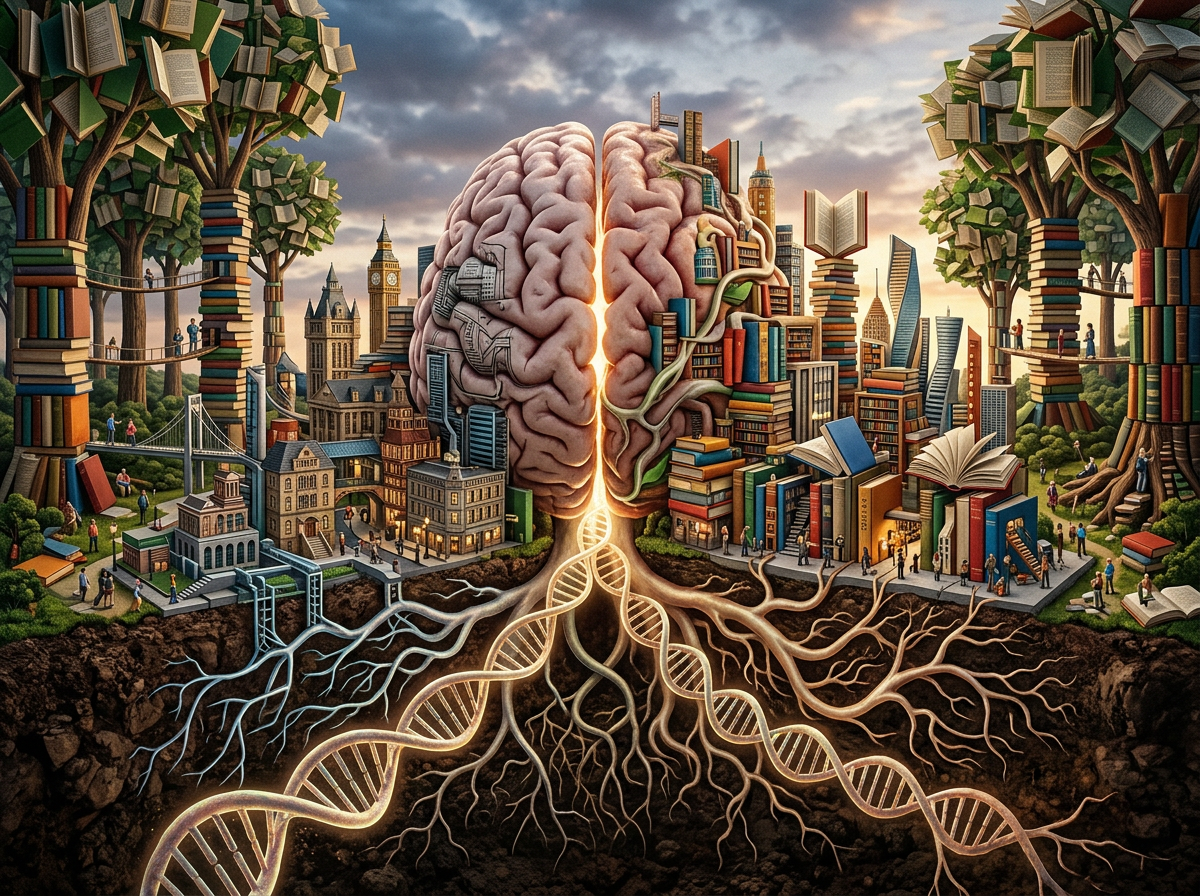
DNA is your script.
Epigenetics is the director.
The script doesn’t change — but the performance does.
Gene–Environment Interaction

This is where things get truly fascinating.
Two people can experience the same environment…
One develops anxiety; the other doesn’t.
Two people can share the same genes…
But end up with completely different outcomes depending on their environment.
This is called gene–environment interaction.
It explains:
- Why siblings turn out differently
- Why some people develop disorders and others don’t
- Why trauma affects people differently
- Why healing looks different person to person
It’s not nature or nurture — it is their continuous, dynamic interaction.
Plasticity: The Brain Can Keep Changing

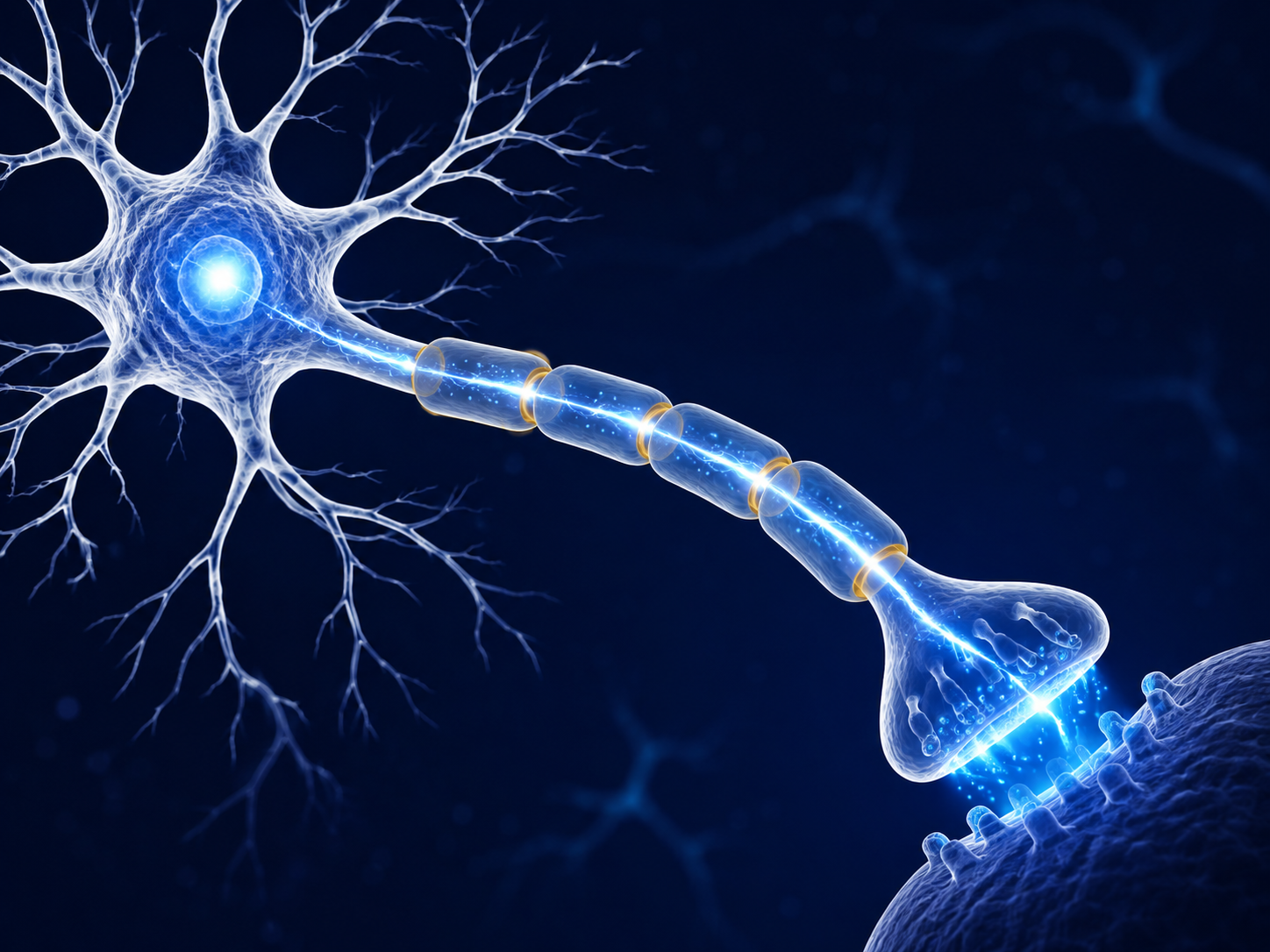
Plasticity is your brain’s ability to:
- Rewire
- Adapt
- Form new connections
- Strengthen or weaken pathways
- Learn new patterns
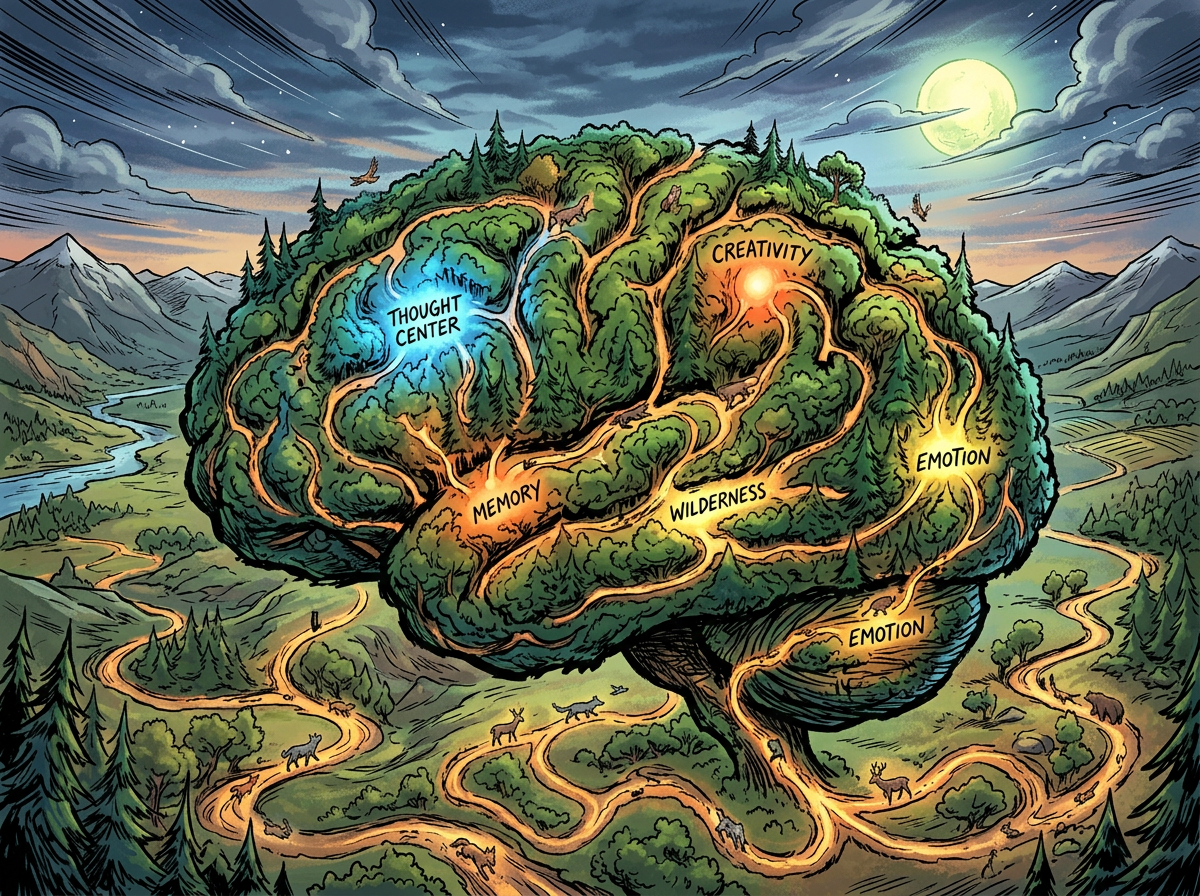
Nature gives you the structure, but nurture shapes how that structure is wired.
Plasticity:
- Is strongest in early childhood
- Continues throughout life
- Allows healing
- Allows skill development
- Makes therapy effective
- Makes habits changeable
Your brain is not fixed.
You are not “stuck.”
But you also have biological boundaries.
Modern psychology embraces both truths.
Three Big Myths About Nature and Nurture
Myth #1: “Genes are fate.”
If genes were destiny, therapy would be pointless.
Reality:
Genes influence you — but experiences shape how that influence plays out.
Myth #2: “Environment can change anything.”
Nurture can’t override biological limits.
You can’t nurture yourself into being 7 feet tall.
Reality:
Biology sets the boundaries.
Environment works within them.
Myth #3: “The debate is over.”
Actually, psychology is still uncovering how nature and nurture interact.
It’s a living science, evolving with every new study.
Lesson Recap
- Nature = biology, genes, brain, hormones
- Nurture = environment, learning, culture, relationships
- Genes give tendencies — not destiny
- Environment shapes how genes are expressed
- Epigenetics shows that experience can modify gene expression
- Gene–environment interaction explains individual differences
- Plasticity allows change across the lifespan
You are not a static product.
You are a work in progress — shaped by both biology and experience.
Coming Up Next
In Lesson 5, we’re taking a guided tour of the brain itself—exploring its structures, functions, and how it shapes your daily life.
Course Textbook Reference
For this Psych 101 series, I reference the textbook Discovering Psychology: The Science of Mind.
If you’d like to explore the book yourself, you can find it here: https://amzn.to/4qYYDBd
Affiliate Disclaimer
As an Amazon Associate, I earn from qualifying purchases at no extra cost to you. This helps support my work as I continue creating free psychology content for students and learners. Thank you for your support!
Meet Your Instructor

Desiree Clemons, M.A. Psychology
Hi, I’m Desiree, an educator, researcher, and creator of The Psychology Notebook. I share clear, accessible psychology lessons to help students and self-learners understand the mind with confidence.