Have you ever wondered what psychology really is?
Not the pop-psychology quotes on social media. Not the stereotype of people lying on couches, talking about their childhood. But the real science behind why humans think, feel, and behave the way they do?
Psychology is far deeper (and far more fascinating) than most people realize. And if you’ve ever tried to understand yourself or someone else, you’ve already been doing it.
Here’s what the science actually says.
Where Did Psychology Come From?
Humans have always been curious about themselves. Long before modern labs existed, ancient Greek philosophers like Plato and Aristotle were asking the big questions: What is the mind? Why do we behave the way we do? What makes one person courageous and another fearful?
The problem? They had no experiments, no data, no systematic tools. They relied on debate, logic, and observation alone. It wasn’t psychology yet, but it was the spark.
The Thinkers Who Pushed It Forward
During the Age of Enlightenment, a few key philosophers started examining the mind through a more scientific lens. René Descartes argued that the mind and body are separate, which opened the door to studying the mind independently. David Hume believed knowledge must come from experience and observation — laying the foundation for what would become empirical science. Immanuel Kant proposed that the mind actively organizes our experience, meaning we’re not just passive receivers of information.
These ideas built the bridge between ancient philosophy and modern psychology.
The Moment Psychology Became a Science
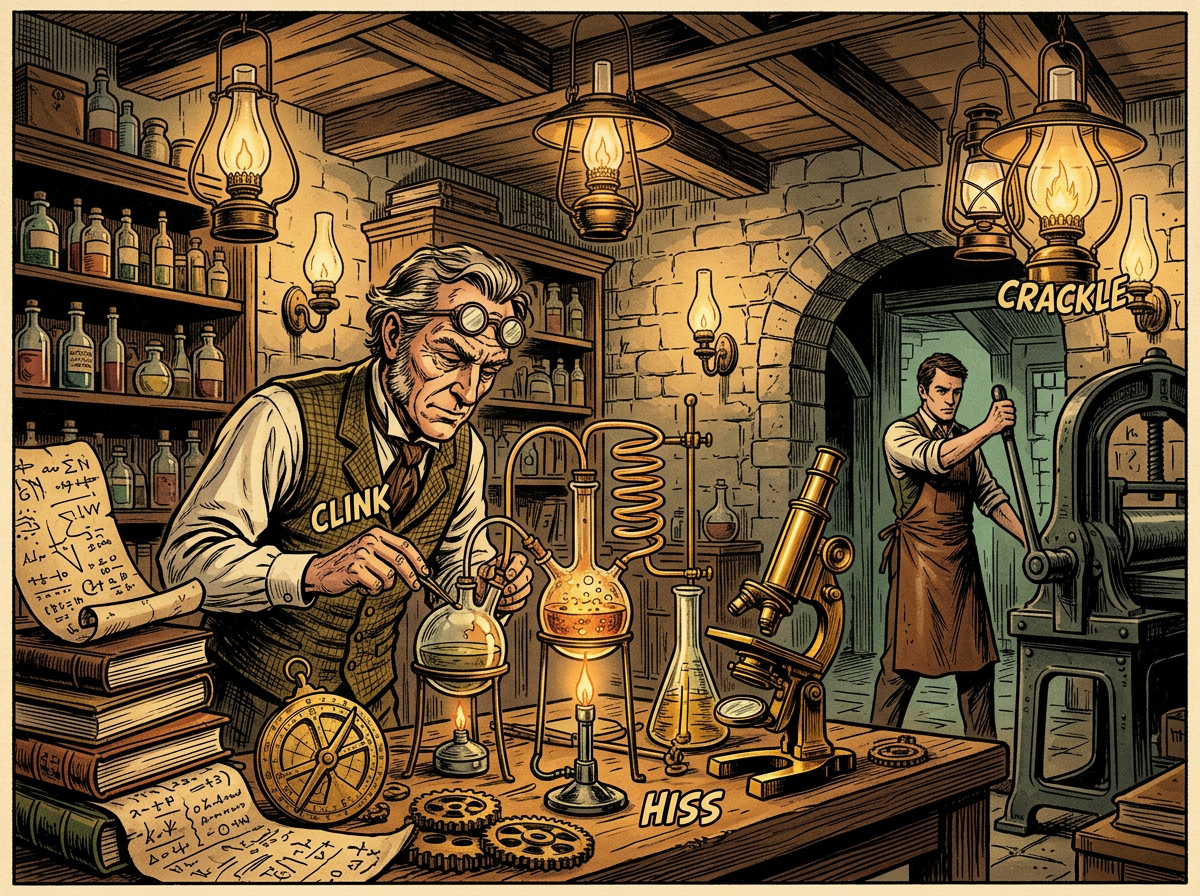
In 1879, a physiologist named Wilhelm Wundt did something no one had done before: he opened the first psychology laboratory at the University of Leipzig in Germany.
This is the moment psychology broke away from philosophy and became its own scientific discipline.
What made Wundt different from the philosophers before him? He used controlled experiments. He measured mental processes like reaction time, attention, and perception. He believed the mind could be studied with the same rigor as chemistry or biology.
That single decision changed everything.
So What Is Psychology, Really?
Here’s the modern definition: Psychology is the scientific study of mind and behavior.
Simple enough, but let’s actually unpack it.
The mind refers to internal experiences: your thoughts, emotions, memories, and perception. You can’t see these directly, but they have very real effects on your life. Behavior refers to what can actually be observed: how you speak, move, avoid, react, laugh, or shut down.
Psychology studies both the inner world and how it shows up on the outside.
The Four Goals That Guide Every Psychologist
Every psychological question, whether it’s in a research lab or a therapy session, is guided by four core goals.
1. Describe — What is actually happening? This means observing and recording behavior without jumping to conclusions. Example: a student avoids eye contact during conversations.
2. Explain — Why is it happening? Psychologists look for causes, patterns, and influences. Example: the student avoids eye contact because of social anxiety.
3. Predict — When will this happen again? Once you understand a pattern, you can anticipate it. Example: knowing that the same student might struggle with presentations or group projects.
4. Change — How can we help? This is where therapy, interventions, and real-world applications come in. Example: using exposure therapy or social skills training to build confidence over time.
These four goals aren’t just for researchers. They’re a framework anyone can use to understand behavior — including their own.
Seven Perspectives, One Big Question
Here’s something most intro courses gloss over: psychology isn’t one single theory. It’s a toolbox. Different perspectives give you different lenses for understanding human behavior, and most psychologists draw from several at once.
Biological — Looks at the brain, neurotransmitters, genetics, and hormones. How does serotonin affect mood? What role does genetics play in anxiety?
Cognitive — Focuses on thoughts, problem-solving, memory, and decision-making. How do the stories we tell ourselves shape how we feel?
Behavioral — Examines learned behaviors, reinforcement, and conditioning. What rewards and punishments are quietly shaping your habits right now?
Humanistic — Centers on personal growth, meaning, free will, and self-actualization. What does this person need in order to truly thrive?
Psychodynamic — Explores unconscious motives, childhood experiences, and internal conflict. How do your earliest relationships still show up in your adult life?
Sociocultural — Considers culture, social norms, community, and identity. How does where you grew up shape what you believe is normal?
Evolutionary — Asks why certain behaviors exist at all. Why do humans fear rejection? Because thousands of years ago, being cast out from your group meant death.
Want a deeper look at each one? Check out 7 Major Psychological Perspectives: A Simple Breakdown — it’s the natural next read from here.
Psychology Is a Living Science
Psychology didn’t appear out of nowhere. It evolved through centuries of questions, discoveries, and scientific breakthroughs. And it’s still evolving — as researchers explore the intersections of mind, brain, body, culture, and identity.
The more you understand it, the more clearly you’ll see yourself. And honestly? The people around you too.
Recommended textbook for this series: I use Discovering Psychology: The Science of Mind as a reference throughout these posts. If you want to go deeper, grab a copy here.
As an Amazon Associate, I earn from qualifying purchases at no extra cost to you.
🧠 Want to study this faster? Grab the Mega Psychology Flashcard Pack — 318 illustrated terms across 24 chapters, instant download for $9.
Meet Your Instructor

Desiree Clemons, M.A. Psychology
Hi, I’m Desiree, an educator, researcher, and creator of The Psychology Notebook. I share clear, accessible psychology lessons to help students and self-learners understand the mind with confidence.